
Buy Second-Hand Bottle Capsuling Machine: A Smart Way to Upgrade Your Packaging Line
As the demand for bottled products continues to rise across industries like food & beverages, pharmaceuticals, cosmetics, and chemicals, manufacturers rely heavily on efficient bottle sealing systems. For many small to mid-sized businesses, buying a brand-new machine can be costly. This is why many companies now prefer to buy second-hand bottle capsuling machines—a practical, budget-friendly, and reliable solution.
A pre-owned capsuling machine offers the same performance and consistency as a new unit but at a much lower investment. Whether you’re expanding your production or starting a new product line, a used bottle capsuling machine is an excellent choice.
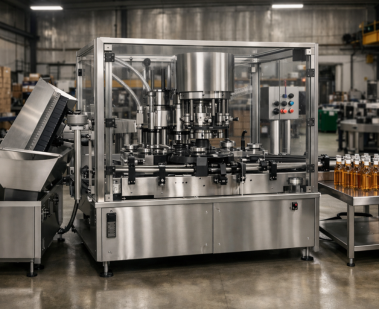
What Is a Bottle Capsuling Machine?
A bottle capsuling machine is used to securely seal bottles with caps, lids, or closures. It ensures uniform tightening, leak-proof sealing, and consistent output.
These machines are used for:
- Water, juices, oils
- Pharma bottles
- Cosmetic bottles (shampoos, lotions)
- Chemical & cleaning product bottles
- Food bottles (sauces, syrups)
Capsuling machines are available in single-head, multi-head, semi-automatic, and fully automatic configurations.
Why Buy a Second-Hand Bottle Capsuling Machine?
1. Huge Cost Savings
Used bottle capping machines cost 40–70% less than brand-new models.
Perfect for businesses that want to scale without heavy capital investment.
2. Fast Delivery — No Lead Time
Pre-owned machines are usually in ready stock, meaning you can install and start production immediately.
3. Proven Reliability
Second-hand machines come from working factories.
You get:
- Real-world tested performance
- Stable sealing accuracy
- Consistent output speed
4. Easy Maintenance
Used capsuling machines often consist of mechanical parts with simple electronics, making them:
- Easy to repair
- Affordable to maintain
- Supported by easily available spare parts
5. Ideal for Startups & Growing Businesses
If you are launching a product line or upgrading from manual capping, a used machine offers professional sealing without high investment.
Types of Second-Hand Bottle Capsuling Machines Available
✔ Semi-Automatic Bottle Capping Machine
Best for small to mid-scale production.
✔ Automatic Bottle Capsuling Machine
For high-speed lines, continuous operations, and uniform output.
✔ ROPP Capping Machine
Used for wine, pharma, edible oil, and spirits.
✔ Screw Capping Machine
Suitable for plastic caps, household products, cosmetics.
✔ Press-on / Snap Capping Machine
Used for jars, beverage bottles, and food packaging.
✔ Multi-head Rotary Capping Machine
Ideal for mass production.
What to Check Before Buying a Second-Hand Capping Machine
To ensure long-term performance, inspect:
✔ Machine condition
Check motor, pneumatic system, capping head, torque control, and conveyor alignment.
✔ Capping accuracy
The machine should maintain consistent torque without over-tightening or under-tightening.
✔ Compatibility
Verify that the machine supports your cap size, bottle shape, and production speed.
✔ Test run or demo
Ask for a video or live testing to ensure smooth operation.
✔ Spare part availability
Choose a model with easily available components.
✔ Brand reputation
Popular brands typically offer better durability and service support.
Benefits of Buying from a Trusted Seller
A reliable supplier provides:
- Refurbishment
- Machine cleaning and servicing
- Accurate condition reports
- Testing videos
- Installation guidance
- Transparent pricing
This reduces risk and ensures you get a reliable machine.
Conclusion
Buying a second-hand bottle capsuling machine is a smart, cost-effective way to boost production, improve sealing quality, and increase efficiency without investing heavily. If properly inspected and sourced from a trusted supplier, a used capsuling machine can run smoothly for years—delivering excellent performance and ROI.
Whether you need a semi-automatic, automatic, screw capping, or ROPP capping setup, the second-hand option offers unbeatable value for your packaging line.